The Organ
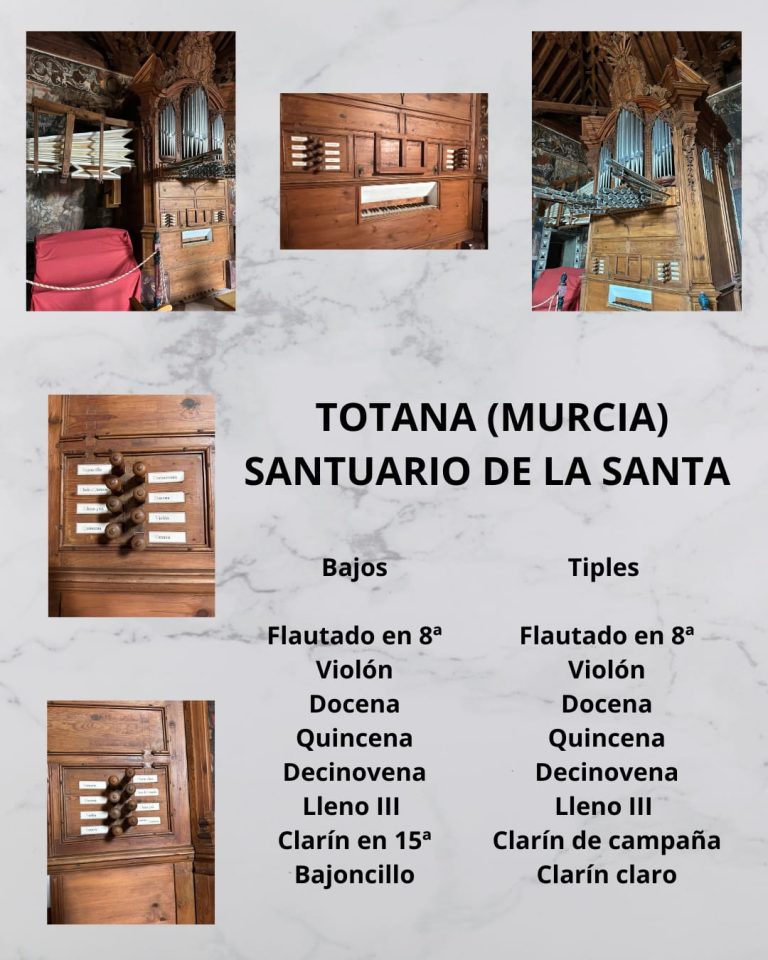
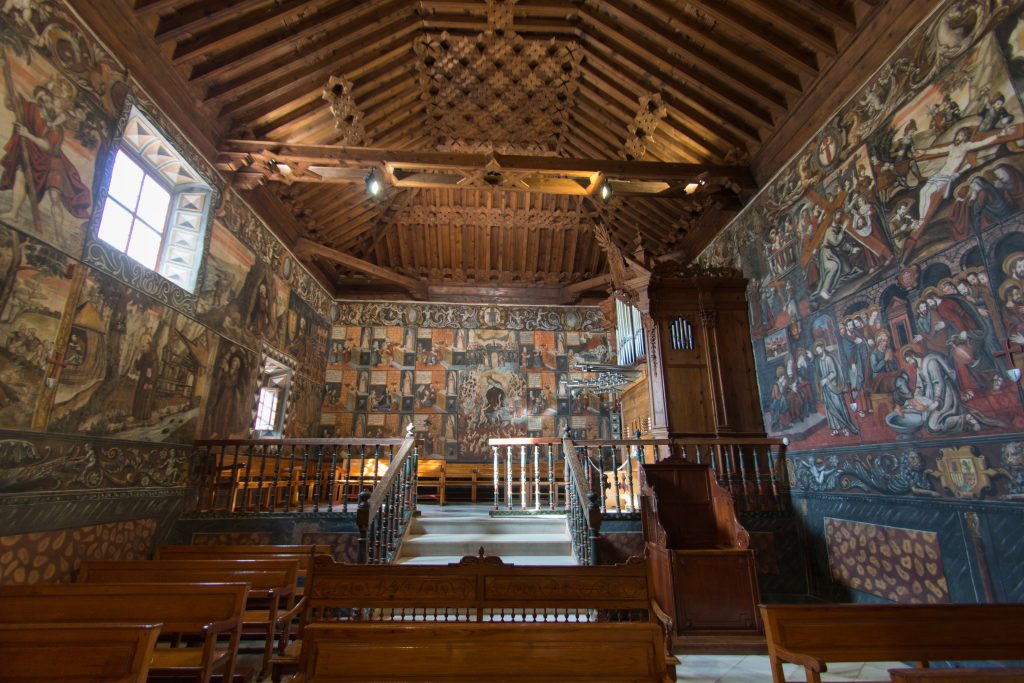
The Baroque organ, located at the foot of the church, in the lower choir above a small gallery next to the Gospel, dates from the second half of the 18th century and is of unknown design.
It is made of wood, tortoiseshell, and lead, with a four-legged, pine-colored case, without a back or roof. It is accessed in modern times through the same location as the console, although it was originally accessed through the left side of the instrument. The organ has three turrets, all with sound tubes, although they are currently covered with a lattice. It has four reed stops on the front, arranged in an “Ave Maria” pattern. Its dimensions are 3.60 m high, 2.10 m wide, and 1.50 m deep.
The instrument underwent its first major renovation during the 19th century, a period when the two rows of exterior trumpets were possibly added. Of the original organ, only the case remains, although it has been transformed by the addition of lattices (which suggests it may have been used for a cloistered convent), the secret of the pedal counters, and some wooden pipes.
The second major restoration took place in 2004. The restoration, which was part of a regional program for the restoration of historic organs, has allowed the organ to shine in all its splendor and has allowed concerts to be held to promote organ music.
The restoration of the organ has had a significant impact, allowing concerts to be held as part of the “Historic Organ Concert Series of the Region of Murcia,” with the aim of raising awareness of organ music and the history of the sanctuary.
In short, the organ of the hermitage of Santa Eulalia de Totana is an important element of the town’s cultural heritage, and its restoration has contributed to the dissemination of organ music and the appreciation of the sanctuary.
With our festival, we aim to provide a stable and ongoing annual program for the sanctuary organ’s musical activities.
Ficha técnica